As the cloud market grows, standards become more important than ever. Very few companies use a single cloud platform or solution to meet all of their needs. Because of this, having ways to coordinate cloud services through standards is extremely important. In this post we’ll look at cloud standards and name the organizations that develop them.
Building applications that comply with standards lets systems work together easily and reduces cost. Integration between the applications in your multi-cloud model would be very difficult without following any standard.
Categories of Standards
Standards are developed around the following characteristics: Interoperability, Portability, and Security.
Interoperability
Interoperability is the ability of systems to freely work together and share information with each other. One of the most important aspects of interoperability is enabling applications to exchange data across multi-cloud environments or on-premises data centers.
To achieve interoperability, cloud providers need standard interfaces. For example, cloud providers typically develop an Application Programming Interface (API) that describes how your resources communicate with the cloud’s resources.
Two examples of interoperability standards applied to the cloud: Open Cloud Computing Interface (OCCI) and The Cloud Data Management Interface (CDMI).
Portability
Portability lets you take applications or data deployed on one cloud provider’s systems and deploy them on another provider as easily as possible.
For example, you can move your virtual server from one cloud environment to another.
The goal of portability is to allow your components (applications or data) to be moved between different providers without needing many changes. The Cloud Data Management Interface (CDMI) standard has been adopted for moving data between clouds.
Security
Security is always a concern. You need to make sure the technologies you use can protect your company’s critical data.
Standards Organizations
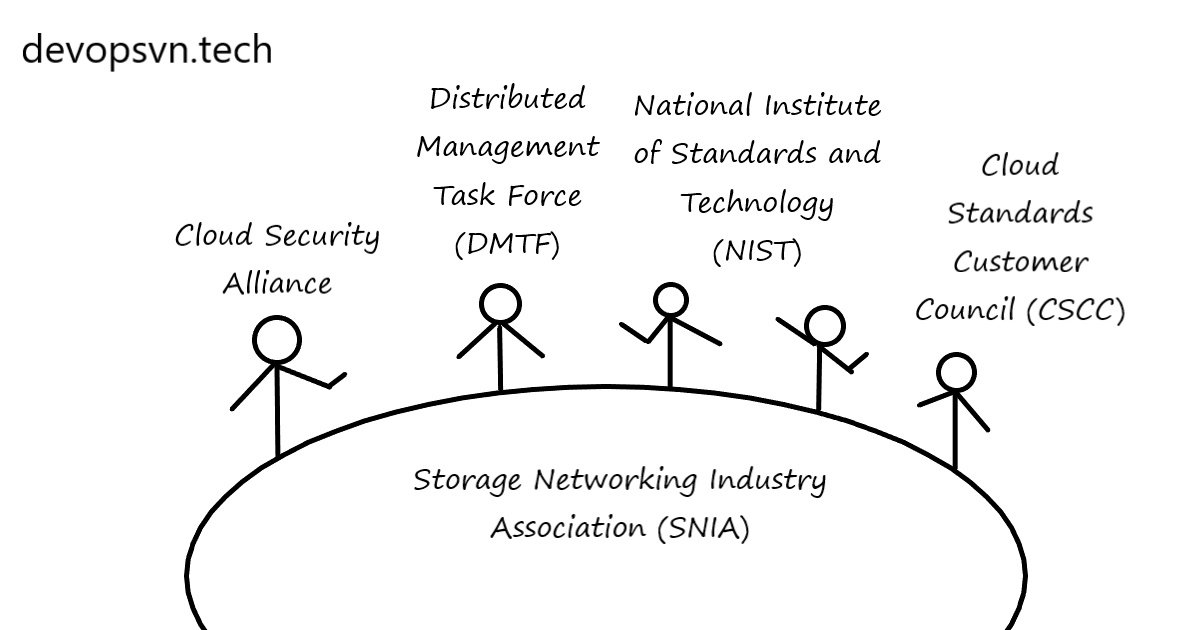
Below are organizations that build standards for the cloud environment:
- Cloud Security Alliance
- Distributed Management Task Force (DMTF)
- National Institute of Standards and Technology (NIST)
- Cloud Standards Customer Council (CSCC)
- Storage Networking Industry Association (SNIA)
You can click the links above to learn more about each organization.
Why Does the Cloud Follow Standards?
Following standards helps cloud providers with the following:
- Easily migrating your configuration or applications from one cloud provider to another. When the cloud follows standards, you don’t need to rewrite much code.
- Easier application integration between data centers and Private Cloud or Public Cloud environments. Standards help you integrate easily and remove many common barriers.
- Avoiding vendor lock-in.
Conclusion
We’ve now discussed standards and the organizations that build them for the cloud environment. In the next post we’ll explore the core technologies used to build a cloud.