Welcome to the Cloud Computing series. In this series we won’t focus on how to use any specific cloud provider — instead, we’ll explore the technology that sits underneath the cloud.
This series is based on the book Cloud Computing For Dummies.
“Cloud” is a term you’ve heard a lot in recent years. It has completely changed the way businesses operate and deploy software. So what is the cloud? Before we can understand what the cloud is, we first need to understand the concept of cloud computing.
Cloud Computing
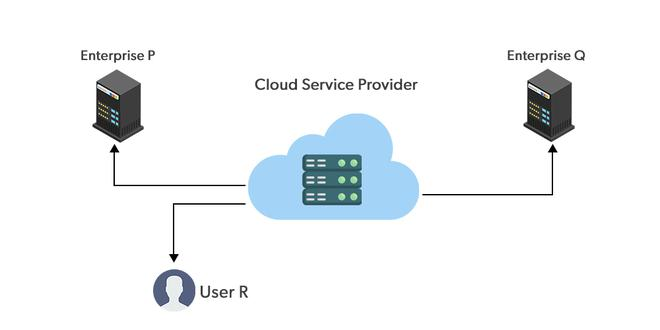
Cloud computing is a way of delivering computing resources to users as easily as possible — including applications, software, hardware, storage, networking, and more.
With cloud computing, everything from infrastructure to applications can be delivered to users as a service over the Internet.
The Cloud
The cloud is a collection of many computing resources — hardware, networking, storage, and software applications — hosted on servers distributed all over the world. These servers all use cloud computing technology so that, as long as a user has an Internet connection, they can easily access any resource.
The cloud is deployed using different models.
Cloud Deployment Models
The cloud has two main models: Public Cloud and Private Cloud.
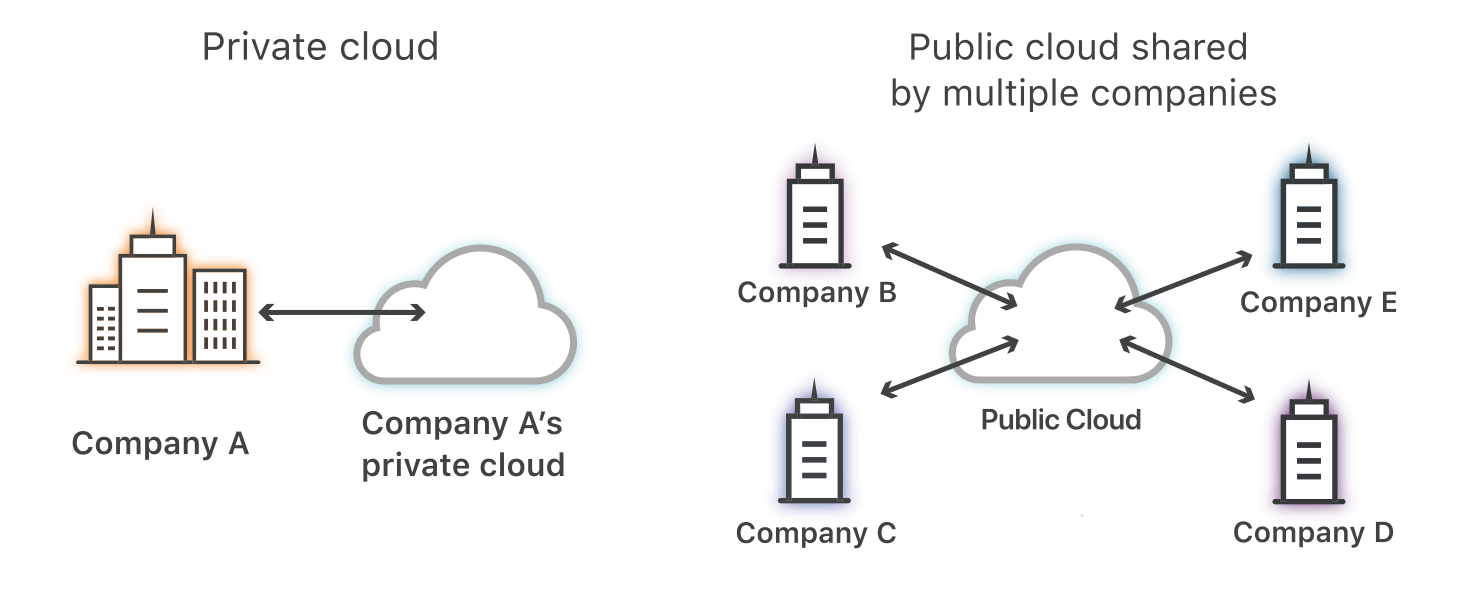
From these two models we get two additional sub-models: Hybrid Cloud and Multi-cloud.
Hybrid Cloud is an environment that combines Public Cloud and Private Cloud together with data centers.
Multi-cloud is an environment that combines multiple public clouds.
Public Cloud
Public Cloud is a model whose resources can be used by anyone. It’s the most common model today because, in addition to providing computing resources, a public cloud also offers a huge number of accompanying services and applications that make deploying software faster and faster.
One example of a public cloud is AWS. With AWS, deploying an application is very fast. For instance, when you need Redis, you don’t have to install anything — AWS provides the Elasticache service, and with a few simple steps you have Redis ready to use.
Most public cloud providers give users a Web Console and an API so they can easily access the cloud’s resources.
Private Cloud
Private Cloud is a model whose resources are provisioned exclusively for a business, or for its employees and partners. A private cloud is an environment that requires a high level of security, so it’s usually placed behind a firewall and not everyone can access it. A private cloud is typically developed and managed directly by the business that uses it.
You can simply think of a private cloud as a company’s own data center that uses cloud computing technology.
One example of a private cloud is FPT Cloud — FPT built a cloud for its own business and employees to use.
Building your own cloud environment is not easy. Today, however, that problem has been largely solved.
Running a Public Cloud on Your Data Center
These days, public cloud providers package their cloud services into applications that can be installed on a company’s own data center (on-premises) environment.
This lets businesses use public cloud services easily while still maintaining security, because their data and applications all run on their own data center.
Conclusion
We’ve now covered the concepts of cloud computing and the cloud. The cloud is the future of the tech industry, and we should learn it to avoid falling behind. I recommend learning AWS, as it’s the most popular cloud today. In the next post, we’ll look at the concepts of Resource Pools and Cloud Models.