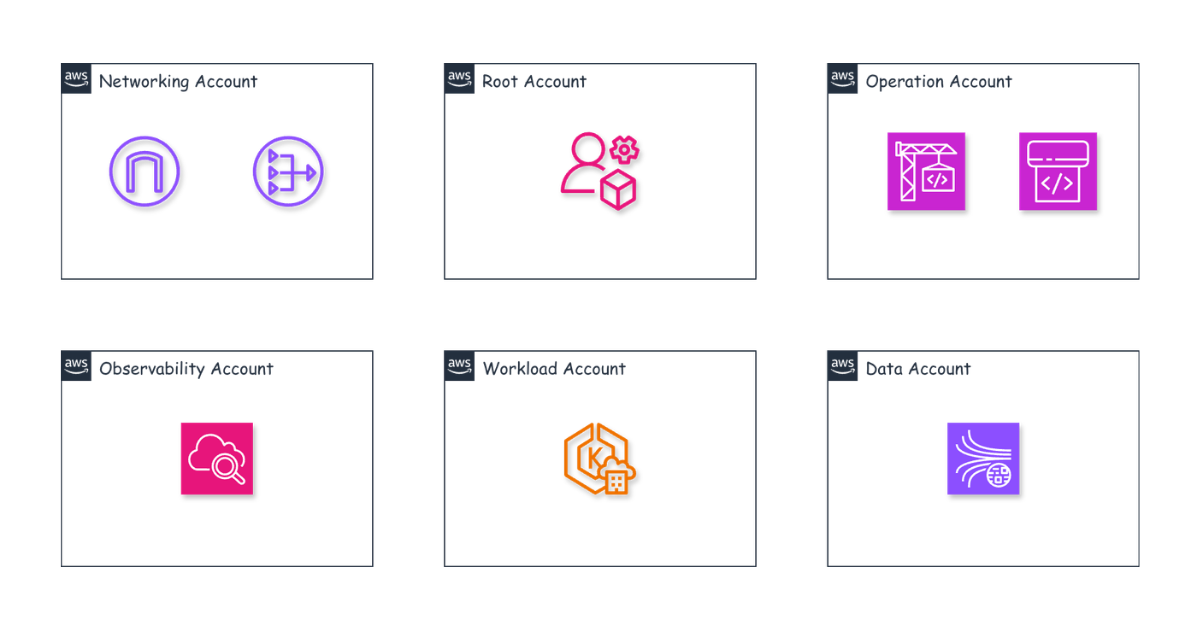
A guide to writing the documentation needed to request AWS credits for a business that hasn’t used AWS before, or for a startup.
How It Works
First, contact the admin Lê Sỹ Cường with a message like: “I have a startup project and need support requesting credits.” Note that your business must have a valid business license and be operating.
Preparation Guide
-
Buy a domain for your business. You can buy from domain providers such as Cloudflare, Hostinger, GoDaddy, and so on. For example, I requested credits for the startup “devopsvn” and bought the domain
devopsvn.tech. -
Prepare an email account with your business domain suffix, for example
[email protected]. To get this email account, look into Google Workspace. -
Give a brief introduction to your project and what you’re about to build.
-
Draw the system diagram (“at least” 50% of the system’s services must be AWS services).
-
Estimate (predict) the system cost — this is the step you should prepare most carefully. Do it on the AWS Pricing Calculator.
-
Write the project documentation in English and send it back to the admin Lê Sỹ Cường. Besides the technical document (see the example), you also need a pitching deck to introduce the project, as if you were raising funds from investors (contact the admin for details).
Example Document
Domain: https://devopsvn.tech
Business: Tech Blog.
Introduction: DevOps VN is a tech blog about DevOps and cloud computing (AWS), with the desire to help our IT community in Vietnam grow.
Project: Building a website for a tech blog with millions of daily active users.
Infrastructure Diagram (adapted from Alex Xu)
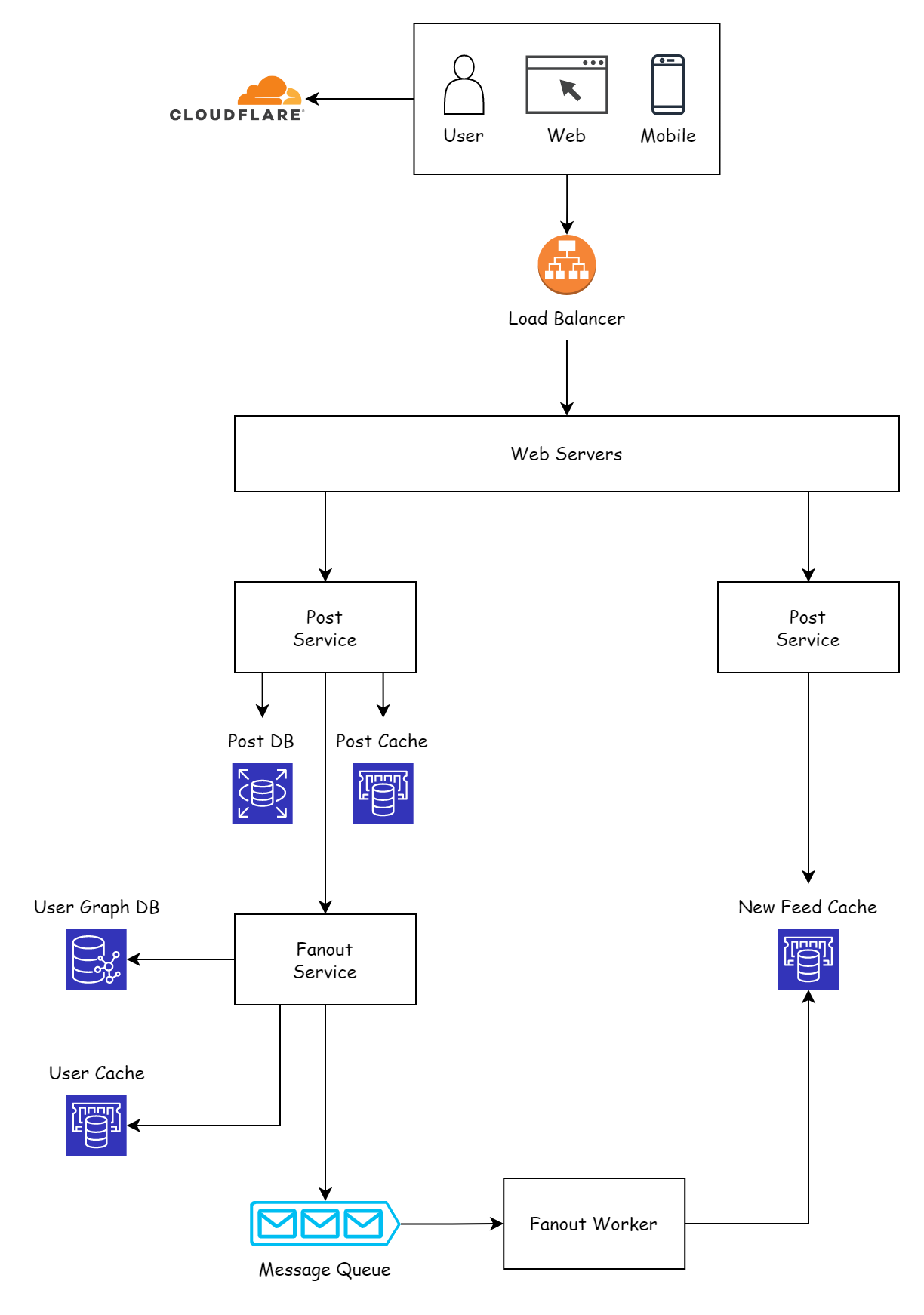
Web servers: Besides communicating with clients, web servers enforce authentication and rate-limiting.
Fanout service: Fanout is the process of delivering a post to all friends. The fanout service works as follows:
- Fetch friend IDs from the graph database
- Get friends’ info from the user cache
- Send the friends list and new post ID to the message queue
- Fanout workers fetch data from the message queue and store news feed data in
the news feed cache. You can think of the news feed cache as a
<post_id, user_id>mapping table - Store
<post_id, user_id>in the news feed cache
News feed service: gets a list of post IDs from the news feed cache. A user’s news feed is more than just a list of feed IDs — it contains the username, profile picture, post content, post image, and so on. Thus, the news feed service fetches the complete user and post objects from the caches (user cache and post cache) to construct the fully hydrated news feed.
Cost Estimate
Attach a link to your system cost estimate at the end. For example, I exported mine as a PDF. Good luck!